
PROGRAM
Friday September 18
CPR REFRESHER COURSE
Optometry Tasmania members have the opportunity to complete a CPR refresher course through the Australian Red Cross the day before the conference.
Date: Friday 18 September
Time: 9:30am - 12pm
Address: 146 Elizabeth Street, Hobart
Rate: Free for OA members residing in TAS.
$85pp (for non OA TAS residents).
You can express your interest by contacting Chynnae Jewell at c.jewell@optometry.org.au.
Saturday September 19
AEST
8:50am-9:00am
Opening and Welcome to Country
Uncle Rodney Dillon
wayti Culture & Knowledge
9:00am - 10:00am
CPD: 1Ti

Damon Hannay
Taking the pressure off
What I’ve learnt developing a collaborative glaucoma care framework and providing an optometry-led model
This talk will discuss my experience in Optometry Australia’s APR program and the changing landscape of collaborative glaucoma care through real life experience. I will use cases to highlight the role an optometrist can play in making meaningful differences in these patients lives
Learning Objectives:
Utilise the resources, courses and accreditations available to expand knowledge and scope for optometrists involved in glaucoma care.
Utilise new tools and research in the diagnosis and management of glaucoma.
10:00am-10:30am
MORNING TEA BREAK
10:30am-12:30pm
CPD: 2i

Dr David Mackey
Part 1: If a couple with myopia, ask “Will our kids get myopia?” what can you tell them.
Part 2: Safe time outdoors prevents myopia
With half the world predicted to have myopia by 2050, what is the epidemiological data showing in Australia? Many genetic factors contribute to myopia with major environmental influences from lack of time outdoors, increased near work and increased education.
We have strong evidence that treatments such as low concentration atropine drops, peripheral defocus lenses, orthokeratology all work to slow progression of myopia. These are expensive and not funded. In contrast, increased outdoor time can fit in with many activities and is less expensive. However, we need to ensure children continue to follow SunSmart UV protection guidelines.
Learning Objective:
Describe the prevalence and risk factors for myopia in Australia.
Recognise the options and availability of treatments to slow myopia progression.
Recommend safe time outdoors to prevent myopia.
12:30pm-1:30pm
LUNCH BREAK
1:30pm-2:30pm
CPD: 1Ni

Luke Arundel
Optometry self-defence:
Lessons from real cases — patient complaints, Medicare investigations and how not to get sued
With years of experience on the Optometrist Advisor Help Desk, Luke will share what he’s learned and how he’s supported optometrists through patient complaints, ethical dilemmas, Medicare audit investigations, and medicolegal and professional risks. The session will discuss how to:
Prevent patient complaints and/or conflict, and understand your rights in tricky patient situations.
Stay compliant and confident in your clinical practice.
Reduce stress and professional risk.
Safeguard your reputation and stay out of court.
This session will equip you with everyday things you can implement today, to help reduce your professional risk throughout your career.
Learning objectives:
Identify common causes of patient complaints and conflict in optometric practice and implement practical strategies to prevent escalation.
Recognise behaviours and documentation errors that increase exposure to medicolegal, Ahpra and Medicare investigations.
Apply risk-reduction strategies to real-world common scenarios involving ethical dilemmas and difficult patients.
Explain your rights and obligations when managing challenging patient interactions and regulatory enquiries.
Adopt preventative strategies, to reduce professional risk and improve compliance, improve confidence and reduce workplace stress.
2:30pm-3:00pm
AFTERNOON TEA BREAK
3:00pm-4:00pm
CPD: 1Ti

Dr Dean Cugley
Acute anterior uveitis – patterns, pitfalls, pearls and predictions
Acute anterior uveitis is the most common presentation of uveitis that is seen by eyecare specialists. In this presentation and interactive session we discuss patterns of presentation, focusing on differentiating subtle causes and considerations when diagnosing these cases, commencing treatment, including management/ therapeutic options for simple and complex cases, complications and ‘pearls.’
Learning Objectives:
Safely undertake examination of a patient with acute anterior uveitis.
Exclude other presentations for red eye and reduced vision.
Safely initiate treatment, and/or refer as appropriate.
4:00pm-5:00pm
CPD: 1T

Dr Nathan Nielsen
Glaucoma update - some interesting glaucoma cases
This session will be a review and discussion of some typical and not-so typical glaucoma presentations, providing an update on glaucoma diagnosis, and current medical and surgical options in glaucoma management.
Learning Objectives:
Identify some of the key features suspicious for glaucoma.
Review some of the challenges in interpretation of glaucoma investigations.
Identify cases that may have extra risks.
Review glaucoma therapeutic options.
5:00pm - 6:00pm
SOCIAL EVENING
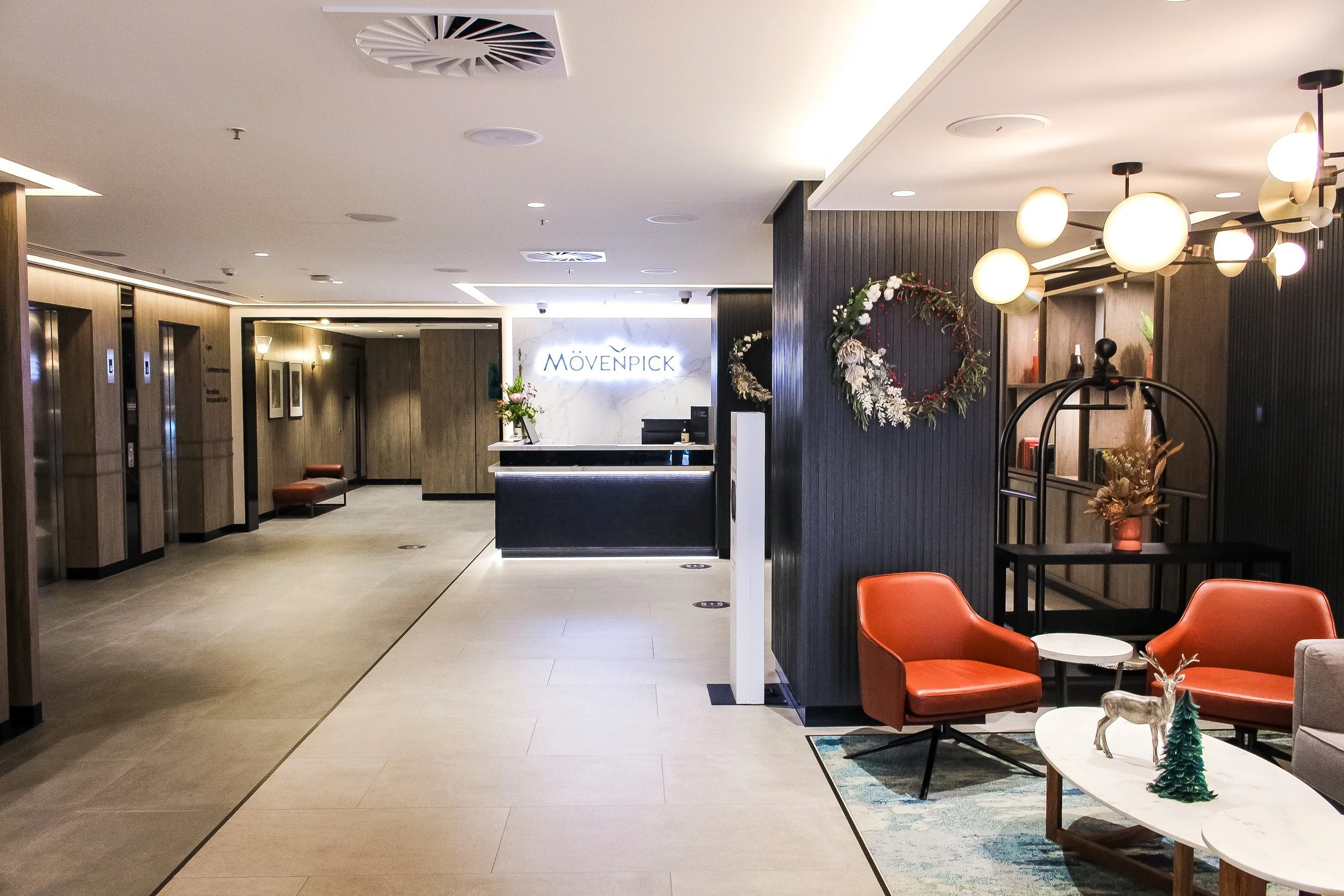
Join us for an evening at Movenpick
Set within the trade conference this year, this evening event will feature drinks, canapés, and a fun activity.
Open to guests of delegates, it’s the perfect opportunity for both interstate visitors and local attendees to connect, enjoy great company, and soak up a welcoming atmosphere with friends and colleagues.
6:00pm
CLOSE
6:30pm + Casual Dinner at Hobart Town Hotel
Continue the conversations from the evening event with colleagues and friends at the Hobart Town Hotel from 6:30pm on Saturday 19 September.
This informal gathering provides a relaxed opportunity for interstate visitors and local attendees to connect, unwind, and enjoy good food, drinks, and company in a welcoming pub atmosphere.
Please note this is a self funded event, with meals and drinks available for purchase at the venue.
All delegates and guests are welcome.
Sunday September 20
AEST
9:00am-11:00am
CPD: 2i

Zoe Deuxberry
Part 1: The role of collaborative care in paediatric vision testing
A look into vision screening in Tasmania and how to best manage care between community optometrist, orthoptists and ophthalmology care. Working on streamlining referrals and sharing care.
Part 2: An orthoptist’s guide to paediatric strabismus
An overview of common childhood strabismus seen in my orthoptic practice, in this session we will go over different types of strabismus, how to assess and management in paediatric patients. We will go through cases to identify and discuss management.
Learning Objectives:
Recognise the importance of optometry care in paediatric vision testing.
Identify the common types of paediatric strabismus.
Apply appropriate management for strabismus.
11:00am-11:30am
MORNING TEA BREAK
11:30am-12:30pm
CPD: 1N

Alex Rigby
Rodenstock Sponsored Session
Refraction, Reflection & Absorption Revisited: The science behind better vision.
This session revises the principles of refraction, reflection and absorption as they apply to modern ophthalmic lenses. It will examine how AI generated optical normative models can be produced to incorporate biometric parameters . The principles of thin-film interference will be covered as the basis for anti-reflection coatings and will be used to inform decision-making regarding suitable coating types for individual patients. Finally, the presentation will discuss the evidence behind wavelength-selective transmission in tinted, photochromic and how contrast enhancement should inform tint selection for individual patients.
Learning Objectives:
Discuss how biometric parameters can be incorporated in producing optical models for lens design beyond using standard reduced Eye Models and the implementation of AI technology in developing such models.
Analyse the differences between anti-reflective coating technologies to justify a coating recommendation based on durability, performance and patient lifestyle factors
Evaluate the wavelength-selective absorption in tinted, photochromic, and 'blue blocking' properties to guide tint and filter selection for individual patients' visual and environmental needs.
12:30pm-1:30pm
LUNCH BREAK
1:30pm-3:00pm
CPD: 1.5Ti

Michael Yapp
Beyond the First Diagnosis - Clinical Reasoning in Complex Cases
Through a series of interactive clinical cases, Michael Yapp challenges participants to look beyond the initial diagnosis and work through complex and unexpected presentations. The session explores clinical reasoning, differential diagnosis, imaging and additional testing, referral pathways and the value of seeking diagnostic support when the clinical picture doesn’t quite fit.
Apply clinical reasoning to complex and atypical ocular presentations.
Use clinical findings and imaging to develop and refine differential diagnoses.
Identify appropriate additional investigations, management and referral pathways.
Recognise when a second opinion or diagnostic support may assist clinical decision making.
3:00pm-3:30pm
CPD: 0.5T
Luke Arundel
Contact lens tips, tricks & hacks
In this presentation Luke will focus on real world, practical ‘take home’ pearls to up your contact lens game in everyday practice. With over 25 years experience as a specialty contact lens practitioner and many years working within the contact lens manufacturing industry he will provide attendees with an overview of how to maximise professional and financial success in this sub-speciality.
Learning Objectives:
Participants will obtain an enhanced understanding of how to increase CL usage with existing patients and enhance practice profitability.
Participants will review basics of RGP, miniscleral and paediatric CL fitting and co-management.
Participants will understand how to manage (and avoid) the most common CL complications.
3:30pm-4:00pm
AFTERNOON TEA

4:00pm-4:30pm
CPD: 0.5
Nicholas Willson
Developing confidence in paediatric care:
Lessons from the ACO course
This presentation will cover key principles of paediatric eye assessment and management, focusing on practical techniques that can be applied in everyday practice. Insights gained from recent advanced training will be used to support these approaches.
Learning Objectives:
Apply age-appropriate techniques when assessing paediatric patients.
Select appropriate tests based on the child’s age and presentation.
Recognise signs of abnormal visual development.
Explain patterns of normal visual development in children.
4:30pm-5:00pm
CPD: 0.5

Dr Kristin Bell
The current state and future direction
of eye health services in Tasmania
This presentation will provide an update on local and state matters and policies from the Head of Department Ophthalmology at the Royal Hobart Hospital and the Chair of the Tasmanian Eyecare Services Network.
There will be opportunity in this session for audience participation and interaction to discuss and inform the Tasmanian Eyecare Services Network’s future vision for eyecare services in Tasmania.
Learning Objectives:
Utilise THS services and referral pathways.
Describe some of the current services gaps, risks and challenges in equitably supplying sustainable eye healthcare to Tasmanians.
Describe the Tasmanian Eyecare Services Network’s future vision and direction for Tasmanian eye healthcare.
5:00pm